
Home
Home, nostalgia, and our ache for a place of belonging

This article companions my previous article ‘Lost’
“It is like coming home to a place I should never have left, to an awareness that was somehow always there, but which I did not recognise.”
(Thomas Keating, Open Mind, Open Heart).
Nostalgia is a bit of a buzzword at the moment. A couple of weeks back, the afternoon drive-show hosts on a popular NZ radio station were nostalgically remembering tunes from their childhoods. They asked people to call in with their nostalgic memories, so my daughter called in and recited the compete theme song to Little Einsteins. She’s only 14, so childhood wasn’t long ago, but it clearly holds fond memories for her. The DJ’s said she nailed it.
She has an incredible memory for lyrics and lines; she can recite most of Hamilton the Musical, and her current on-loop fascination is Epic, a musical, multi-album retelling of Homer’s Odyssey. This ancient story is buzzing at the moment too, the 3000-year-old tale of Odysseus, King of Ithaca, returning home from the Trojan War.
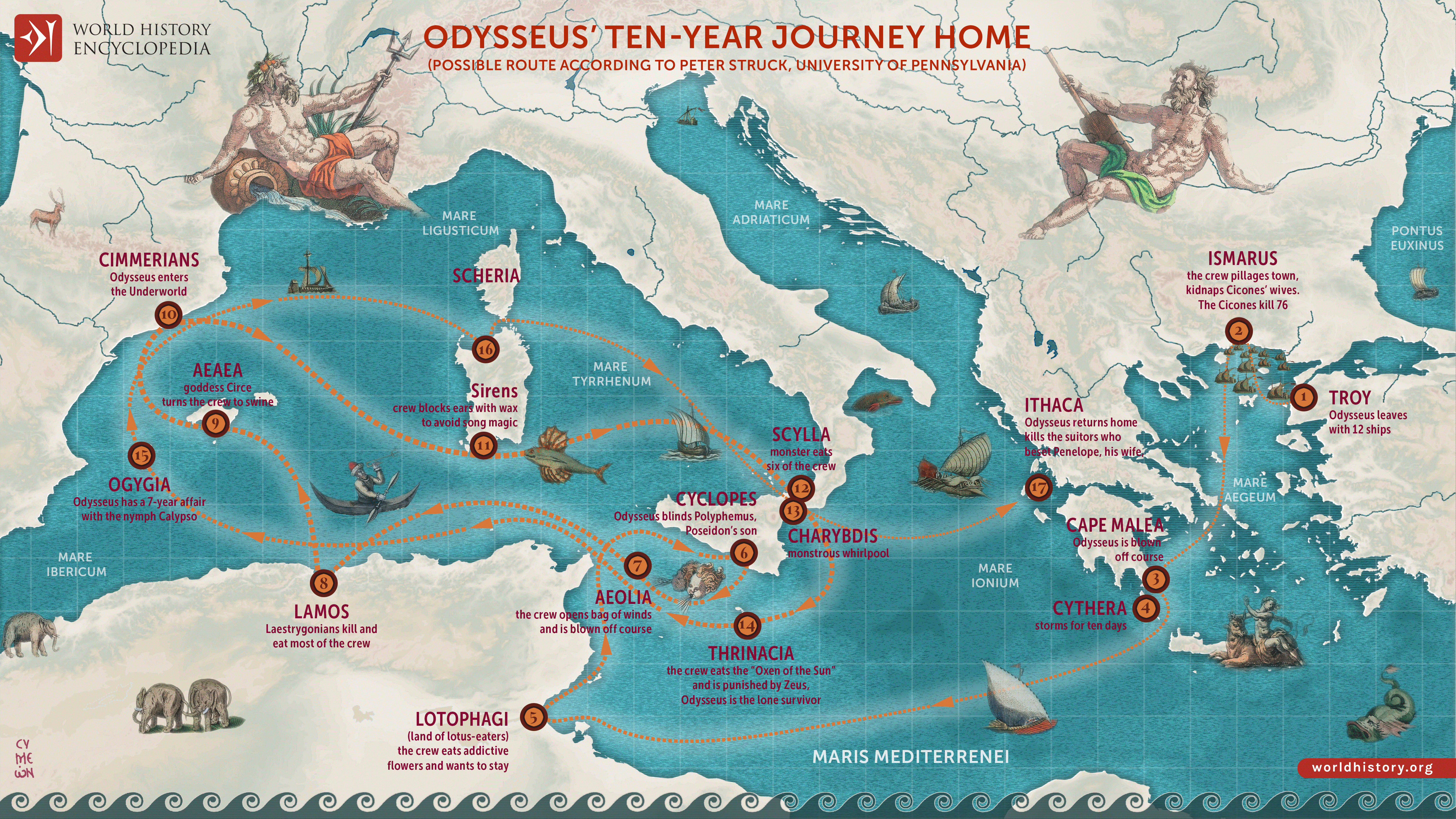
There’s something timeless about that theme of returning home, and the longing that accompanies it. So much of art, poetry, literature and music talks about the longing for and journey towards home.
Playlists
A few years ago I started collecting a playlist of songs about Home. It’s not an exhaustive list, just songs that have caught my attention and imagination over the years; an eclectic collection of artists bringing words and imagination to that universal longing for home – that place where everything is in its right place.
Home can mean different things. It can be our hometown, a portal in our memory back to our place of origin: like John Denver’s country roads, or Ed Sheeran’s old country lanes. They’re nostalgic, but there’s a pang in the remembering: “Take me back to when,” Sheeran longs; “I should have been home yesterday,” Denver regrets.
Home can also mean a present place – our home address. There’s an ache in the distance from that place. Kiwi artists feel the pain of distance while so far from our South Pacific homeland. Shihad’s Home Again is an anthemic banger,1 carrying both regret – “I’m sorry, I was miles away” – with a steely determination to return – “I’ll be home again.” Jack Johnson’s home is tranquil – his garden, birds in the attic, seeds on the ground, changing seasons – but ultimately it’s not just a place but connection: “Home is wherever we are where there’s love there too.”
All of this presumes that home is a happy place. Everclear’s Wonderful comes with a light, catchy tune, but describes the dark pain of a broken home. This child longs for “the things that I had before like a Star Wars poster on my bedroom door”, but refuses to accept the normalising or bypassing of his family strife: “Please don’t tell me everything is wonderful now.” We know in our bones it’s not meant to be like this.
Nostalgia
The word nostalgia carries a deeper meaning than just the recall of cosy memories. The Greek word nostos means ‘return home’. The ancient Greeks had an entire literary genre called the Nostoi – ‘the returns’, the most famous surviving example being The Odyssey. But álgos literally means ‘pain’ or ‘suffering’ (i.e. neuralgia = nerve pain, myalgia = muscle pain). Nostalgia in its truest form is a visceral ache of separation from home. Odysseus is driven by the pain of prolonged distance from his wife and son. His journey is tenuous and costly, confronted by obstacles and jeopardy, and at each step we wonder, “Will he make it?” Will this next challenge or monster be his end?
Spoiler alert: (although in fairness, a 3000-year-old one) Odysseus makes it home to Ithaca, overcoming overwhelming odds. But Ithaca isn’t the place he remembers. And worse, Odysseus isn’t the man Ithaca remembers. His struggles have changed and contorted him.
I’m surrounded by the souls of those I’ve lost
I’m the only one whose line I haven’t crossed
What if the greatest threat we’ll find across the sea is me?
What if I’m the monster?
Without pretending to be an expert in ancient mythology, it strikes me that this story is more than just a journaling of a hero’s adventure. It’s an archetype of our own battle to survive the challenges life throws at us, and the ways our own sense of self can be misshapen or distorted in the fight to hold on to control, safety and belonging.2 Life has a way of frustrating and shattering our hopes and securities, and in crisis we wonder, “will we make it?”
Jeopardy
Crosby, Stills, Nash & Young’s Our House is a beautiful song, a soundtrack for countless home decor ads with a warm fire, flowers in a vase, two cats in the yard, and “everything is easy cause of you.” Home is a state of ease, and a picture of tranquillity and love.
Our House is Track 7 on their 1970 album Déjà Vu, back when albums were crafted to tell a full story. But the full story demands Track 7 is held in tension with Track 8, 4 + 20; a short, sombre and tragic song of disconnect, fracture, addiction and despair. (Trigger warning: if you are sensitive to themes of suicide, please don’t listen to it).
We’re deeply wired for home, but life doesn’t promise happy endings. We must hold these truths in both hands.
In my last article ‘Lost’ I mused, “Perhaps we can never be truly lost.” Even when we’re displaced and without our bearings, there’s a deeper wisdom guiding us if we learn to quiet ourselves and listen.
We are never truly lost, and yet I wonder if we can ever truly be home either.
We can’t go back to our nostalgic memories, and we were never meant to stay there. Living and growing means being separated from our comforts, but in that painful space between remembered comfort and our current reality we grow and mature. That growth is never linear though. Odysseus’ journey wasn’t linear, but a repeating cycle of jeopardy, crisis and tenacious overcoming. It costs him. He faces monsters, but he also finds friends in surprising places. All of it shaped him.
Parts of Us
The people our journeys intertwine with shape us. Ed Sheeran recalls “these people raised me”, but not all fared well. Relationships fade or fracture. Tragedy strikes. We age and our bodies fail. As life carries on, through triumphs and tragedies, we’re faced with that inescapable reality that none of us make it out of this story alive. It all matters though, and the stories point us to something: a reality further down the road that we’re journey toward.
There’s also something deep within us, a reminder of who we really are. That innocent child, uniquely and wonderfully made, filled with awe and wonder, a version of us before the world forced us to conform, adapt, and armour up to survive. That child is still there, asking to be remembered, inviting us to hold the tension of our innate beauty, and the story of the journey that got us to where we are now. All of it belongs, even the painful bits, and holding all this together helps us to again feel at home in our own skin.
Maybe these songs reach me so deeply because they point to something genuine and real. Across the spectrum these artists encompass, there’s a universal hope and tenacity that draws me towards a sense of feeling more at home in myself, and finding a sense of tranquillity and ease even amidst the doubts and storms.
Home, then, is less a place and more a posture, a direction of travel towards that point on the horizon we know we’re called to and made for. It’s the determination to face the monsters we encounter, and the humility to accept we don’t always get it right. Our battle to survive costs us, but there’s a deeper invitation in our stories drawing us to love, acceptance, forgiveness, and the courage to try again. Sometimes that takes the teeth-gritted, fierce tenacity of Ellie Goulding’s Home. Other times it’s the quiet and deliberate perseverance of Sleeping at Last’s North.
The Wisdom of Misfits
If you listen all the way through my playlist, you’ll find an oddball entry at the end. The coda to my compilation of serious artists and storytellers is a Muppet. I grew up with the madcapped mayhem that was the Muppet Show. Just like my daughter can recite Epic or Little Einsteins by memory, I could sing word for word every song on our Muppet Show LP.
We also had the soundtrack of the original Muppet Movie; the origin story of Kermit and his friends’ trans-American road trip to stardom. They faced obstacles and villains on their journey. At the point of high crisis, stranded in the Nevada desert, with all hope lost, Gonzo poignantly croons I’m going to go back there someday, capturing their deep yearning and yet an even deeper hope:
“This looks familiar, vaguely familiar,
Almost unreal yet, it’s too soon to feel yet,
Close to my soul, and yet so far away,
I’m going to go back there someday.”
The Muppets were a zany bunch of weirdos, yet even they thought Gonzo was weird. No one even knew what kind of creature he was. But sometimes it’s the misfits that surprise us with the clarity and insight that capture a depth of emotion everyone else misses. To me, that’s the genius of making Gonzo’s song the movie’s axis. Kermit’s the story’s hero, and Rainbow Connection its Oscar-winning hit, but when hope is lost, it’s the misfit Gonzo who reminds Kermit who he really is.
Perhaps it’s the misfit parts of ourselves we’re convinced don’t belong that our stories in fact turn on. The parts we’re most embarrassed about, the parts we turn away from or resist, the parts of us we’d prefer others didn’t see – the hardest parts of our story – quietly and subtly point us to what really matters. Accepting that all of who we are belongs is part of coming home to ourselves as we were divinely created to be.
This is what I think Thomas Keating meant by “It is like coming home to a place I should never have left, to an awareness that was somehow always there, but which I did not recognise.” He doesn’t mean we “should never have left” as though we erred or transgressed – our original sin – but that life happened to us and misshaped us. God still sees the true, divinely imagined us. We’re lost, not broken, and God invites us home like the Prodigal Son.
I’m slowly learning that all of my journey matters, that all of me belongs, and I’m finding peace in being able to hold it all in both hands, knowing I am loved, and worthy of that love. Always learning to realise I’m already home.
There’s been the occasional conversation about Aotearoa New Zealand’s National Anthem God Defend New Zealand. I love and have no objection to it, especially with the inclusion of Te Reo Māori, but I would secretly love to see a Kiwi Olympian on the gold medal dais as the opening riff of Home Again blasts across the PA system. Pure gold.
In his book Travels with Odysseus, Michael J. Goldberg explore the epic as caricatures of our own personality patterns and fixations.
Good to read this morning, Mark, thanks. I’m looking forward to seeing the movie. Regarding the NZ National Anthem; given the way we burst into joy when a stadium full of kiwis sing the Exponents ‘Why does love do this too me’, that’s got to be a strong contender. We at least need someone like Don McGlashen to give us a new melody to replace the current dirge to which we sing “God defend”.
Thanks Mark. I love Dave Dobbyn’s Welcome Home and I think it’s played at ceremonies where people become NZ citizens, which I’m kind of proud of given the anti- immigrant stuff happening around the world. We also played it at my Dads funeral thinking about the ultimate homecoming.