
The Oscar, the Lobby, and the Sweet-Cake
From Exemplar to Exile: When a culture turns on its shining stars, and what that says about who we are.

This is the third article in my series on the Kiwi collective psyche and the formation and evolution of cultural norms. If you’ve stayed with me this far, thank you.
I’m leaning further into the friendly cultural rivalry between New Zealand and Australia. It’s tongue-in-cheek, but my main point isn’t beating Australia in a national gloat-fest – that’s silly. This week I want to go deeper in exploring the two sides of the mask of personality: the things we accentuate and embrace, and the things we hide in the shadows and avoid, and even shun.
The Sweet Cake
In 1935, in Perth, Western Australia, a legend was born. Bert Sachse, head chef at Perth’s Esplanade Hotel, created “a crusty meringue-like sweet cake topped with whipped cream and passionfruit;”1 a delicately crisp outer crust with a light, marshmallow-like centre. As light as a ballerina. His creation was named after touring Russian prima ballerina Anna Pavlova. The famous Aussie ‘pav’ was born.

Problem is, this wasn’t the first pavlova. In 1929, in New Zealand’s very rurally named ‘Dairy Farmer’s Annual’, the same recipe named ‘Pavlova’ appeared, proof “that the pavlova was ‘created’ or ‘invented’ and then stolen/falsely claimed by chefs/cooks across the Tasman.”2 Typical. Aussies have always liked stealing little brother’s toys.
A 2020 BBC article3 suggests this sweet cake has a much earlier history in Europe, an obvious attempt by emotionally-distant Mother England to knock her antipodean children’s heads together and take our toys away completely. But we won’t have it. We continue our little play-fight, knowing no one will ever really ‘prove’ where it came from. (It wasn’t Australia though, just sayin’.)
The Oscar
The late 90s and early 2000s was a breakout time for Kiwi talent on the silver screen. From Jane Campion’s The Piano to Peter Jackson’s Lord of the Rings trilogy, Kiwi filmmakers not only swept awards but put New Zealand’s jaw-dropping natural scenery on the world stage. From the majestic Southern Alps to 11-year-old Anna Paquin’s adorable best supporting actress speech, the world was discovering New Zealand through cinema.
Out of all the awards claimed, only one Kiwi-born actor has ever won an Oscar for lead actor. Just one.4 It was no fluke either; he was nominated three years running. This guy was the premium product. A superstar. Maximus. The Gladiator. And we were basking in his reflected glow.
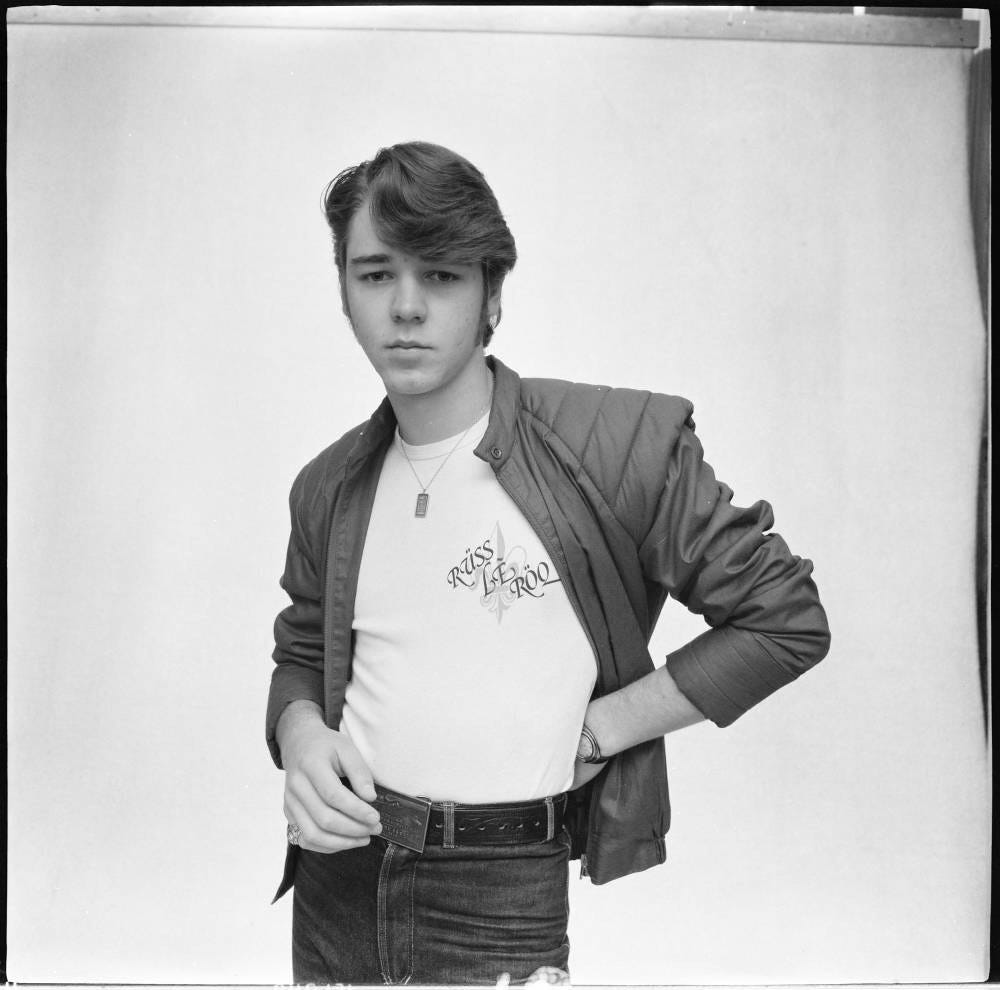
Russell Ira Crowe was born in Wellington in 1964. When he was young, his family moved to Sydney but returned during his high school years. He began his performing career in Auckland as ‘Russ Le Roq’. Seeking brighter lights, he headed back to Australia, appearing in Neighbours and Romper Stomper, then on to Hollywood with 1997’s L.A. Confidential and his run of nominations in The Insider, A Beautiful Mind, and Gladiator.
We were so proud. The world was raving about our Kiwi boy Russ. Kiwi success. Kiwi recognition.
Of course Australia were claiming him too. But he was born in New Zealand. He’s ours. Back off.
The Lobby
Life in the bright lights is intense and stressful. It can bring about darker moments, as the Finn brothers discovered a couple of decades earlier, sans 24/7 global news coverage and tabloid media. And us Kiwis get a bit uneasy when our flag-bearers deviate from our favoured personas of ‘strong-silent type’ or ‘easy-going, friendly and self-deprecating.’ Don’t be a big-shot, don’t rock the boat, don’t mouth off and whatever you do, don’t make us look bad. The Finns fit our ‘easy-going’ mould nicely. But Russ? Stories started to suggest he wasn’t so chill. Short-fused. Intense. Brash. Explosive.
Just after receiving his BAFTA for A Beautiful Mind, he was seen in a heated argument with the awards producer off stage.5 That’s not chill, Russ, not cool.
Later that year, police were called to a London restaurant after a fight broke out between Crowe and a Kiwi businessman.6 Public brawling is definitely not cool. What will Mother England think?
He was then seen fighting with his personal bodyguard.7 Good grief, Russ. South Park climbed on board with the bad-boy image: Russell Crowe “fightin’ ‘round the world” – “Born in New Zealand in ’64, a hot-headed actor named Russell Crowe…” Kiwis are chill and friendly, not hotheads. (They made his accent sound Australian though. Maybe we could fob him off to the Aussies and get out of this…)
The final straw was in the lobby of a New York hotel in 2005. His temper exploded as he threw his phone, hitting desk clerk Nestor Estrada. He was arrested and charged with felony assault and possession of a weapon, and pleaded guilty to reduced misdemeanour assault. Estrada sued for emotional harm.8
Glowing pride turned into national shame.
Exemplar to Exile
While in Australia in 2009, NZ Prime Minister John Key was engaging in the usual trans-Tasman banter with the Aussie press. Regarding Phar Lap, Crowded House and the pavlova, he said, “Everybody knows that they’re ours and for Australians to claim ownership of them is quite inappropriate.” But he was happy to offer them Russell Crowe instead.9
In a Test cricket match between Australia and New Zealand at Wellington’s Basin Reserve; the proper 5-day sometimes-intriguing-even-thrilling-but-often-dull-as-watching-grass-grow version – the mixed Kiwi and Aussie radio commentary team started up the usual banter: Phar Lap, Crowded House, Kiwi-born Aussie champion cricketer Clarrie Grimmett.10 The Kiwi offered a deal: “How about we keep the pavlova and you can have Russell Crowe?”
I’m not joking. We’d trade our only Oscar-winning lead actor, for a sweet cake.
All good banter, right?
Tall Poppy Syndrome
There’s a serious problem here. And the problem isn’t Russell Crowe. To me, the problem is a national cultural psyche that happily basks in someone’s glory when they’re riding high, but shoots them down and abandons them when they’re low. Is it a knee-jerk reactivity to perceived brand damage? An instinctive chopping down of someone who has risen too high for our comfort? An envy-driven national schadenfreude that delights in a big-shot getting taken down a notch or two?11
Russell Crowe is clearly a strong, driven, assertive and expressive personality. A Challenger. Self-assured enough to put himself out there, in the bright lights, to make a name for himself, and not take any crap. He found fast fame but with it the intense glare of living in a fishbowl. Those accepted Kiwi male exemplars of ‘strong-silent type’ or ‘chill, easy-going and friendly’ don’t fit Russell Crowe – or he refused to fit them. In a culture that doesn’t model or encourage healthy emotional expression (“Don’t be a sook”, “Don’t get angry”, “Pull yourself together”), what happens when you are naturally emotionally expressive? You can bottle it to fit in, but what happens when the pressures build up?
To be completely clear, I’m not condoning public violence. That deserves to be called out, and was. But this wasn’t just about calling out specific instances of poor behaviour, because this shade on Russell Crowe still exists today. It’s become part of the story of Kiwi identity and cultural norms: “Be famous, we love our sons and daughters on the world stage, but stick to the norms. Be self-depreciating, don’t be a big-noter, don’t be too expressive or mouthy, and don’t make us look bad. Don’t be a Tall Poppy.”
Behind the Mask
“I’m extremely sensitive, and that’s probably where some of my negative stuff comes from,” Crowe admitted to Australia’s Sunday Night in 2014. “I’m a little bit intuitive, so I know from a handshake whether somebody means me good or ill. And sometimes I don’t want to, once I know where they’re coming from, I don’t want to play that game anymore.”12
Crowe became known for being abrupt and sometimes prickly in interviews, as discovered by the guy who tried to critique his Robin Hood accent.13 It’s simplistic to say he’s just an impulsive dickhead, as much as that simple tag works great for tabloid headlines. He’s far more complex than that; sensitive to criticism and an intuitive sense of power dynamics. The very traits that make us individually unique can come across awkwardly, especially traits our culture is uncomfortable with, like emotional expression or sensitivity. When healthy outlets for these traits aren’t modelled around us, when they’re outside the ‘norms’, we hide them in the shadows of our psyche and pretend to be ‘normal’. But there is no ‘normal’; we are all vastly diverse in many ways, and that is inherently good. Our traits are God-given gifts; growing and maturing is learning how to embrace them. ‘Character flaws’ are often the flip side of our greatest strengths, just waiting to be embraced, not hidden in the shadows. Just like Crowe’s rare acting gift. The Marlon Brando of our time.
Crowe immediately apologised to the BAFTA producer, and his son who witnessed the incident. He wasn’t so much upset his speech was cut short, but rather that the poem he read – a poignant tribute to famed mathematician John Nash, who he played in the movie – was cut from the telecast for time. He didn’t see it as a slight on himself but on the heartfelt tribute to Nash.
Crowe’s bodyguard Mark ‘Spud’ Carroll was trying to alert him to speculation and gossip about him. “Spud was passing on other people’s ‘perceptions’ and I shot the messenger.” Spud himself said, “As for calling it a fight, believe me, we have done much more damage to each other playing touch footy.”
And the phone in the lobby? A combination of “jet lag, loneliness and adrenalin” while trying to call his wife back in Australia triggered his frustration. The phone wouldn’t work and he hurled it against a wall. He was embarrassed and admitted his fault publicly. He gave the clerk $100,000. “The bottom line is I did something pretty stupid... this is possibly the most shameful situation I’ve ever gotten myself into in my life.” “It’s past me now... and I can play the role of ‘that’s water off a duck’s back,’ but I’m not that guy.”14
Accepting Ourselves
The younger Russell Crowe, outwardly feisty but inwardly sensitive and struggling with the pressures of fame, has mellowed with time and come to terms with himself. “You gotta cut yourself a bit of slack... if you’re a dick every now and then, you know. It’s bound to happen. You’re bound to get somethin’ wrong, you know.”15 This isn’t whitewashing poor public behaviour: he’s publicly owned these things, isn’t proud of them. Still regrets them.16 But he seems to have come to understand who he is, accepting and embracing the many facets of his personality, light and dark. All the parts of him finding equanimity.
Australia seems to have also grown to accept him as he’s mellowed with time, and perhaps with himself. His neighbours and surrounding communities deeply appreciate his generosity.17 He’s one of the National Trust of Australia’s National Living Treasures. Only two non–Australian-born faces have ever appeared on Australian postage stamps: Queen Elizabeth II and Russell Crowe.18
But this isn’t really about Russell Crowe. Has New Zealand come to accept different personalities, different expressions of our humanity and all that these diverse traits and gifts bring to our collective identity? Have we yet learnt to accept all the different parts of us, and what these diverse voices have to teach us? Can we all stand tall and be authentically ourselves? Can we collectively embrace all of us?
I’ll leave the last word to the man himself. Maximus. The Gladiator. Russ. Human.
So says emeritus professor Helen Leach, Kiwi food anthropologist at the University of Otago and author of The Pavlova Story: A Slice of New Zealand's Culinary History
Anna Paquin won best supporting actress, Kiwi raised but Canadian-born.