
Mark, my word... | Take One
The eclectic and varied thoughts, recollections, ponderings and expression of a random little snowflake from small-town New Zealand. Take one.

I used to love to write. Some time back before I intuited that wordsmiths or poets or creative dreamers weren’t really the type that young boys aspired to be in a small, semi-rural New Zealand town in the 1980s. So instead I learnt to do. And strive. And I guess prove: prove that I could do it, that I could be the boy that matched the Kiwi exemplars that seemed to be the norm. The ones that others admired. Like the rugby players, or the adventurers, or the innovators, or the quick-witted comedians that made everyone laugh, or the strong-silent types that made the girls gush. Writers didn’t do that. And certainly not emotive poets. Heck no.
That was back in the morning of my life. In the early morning, as the sun is climbing, everything seems a little more vivid, a little more bright and hopeful. All the possibilities of a new day. Promise.
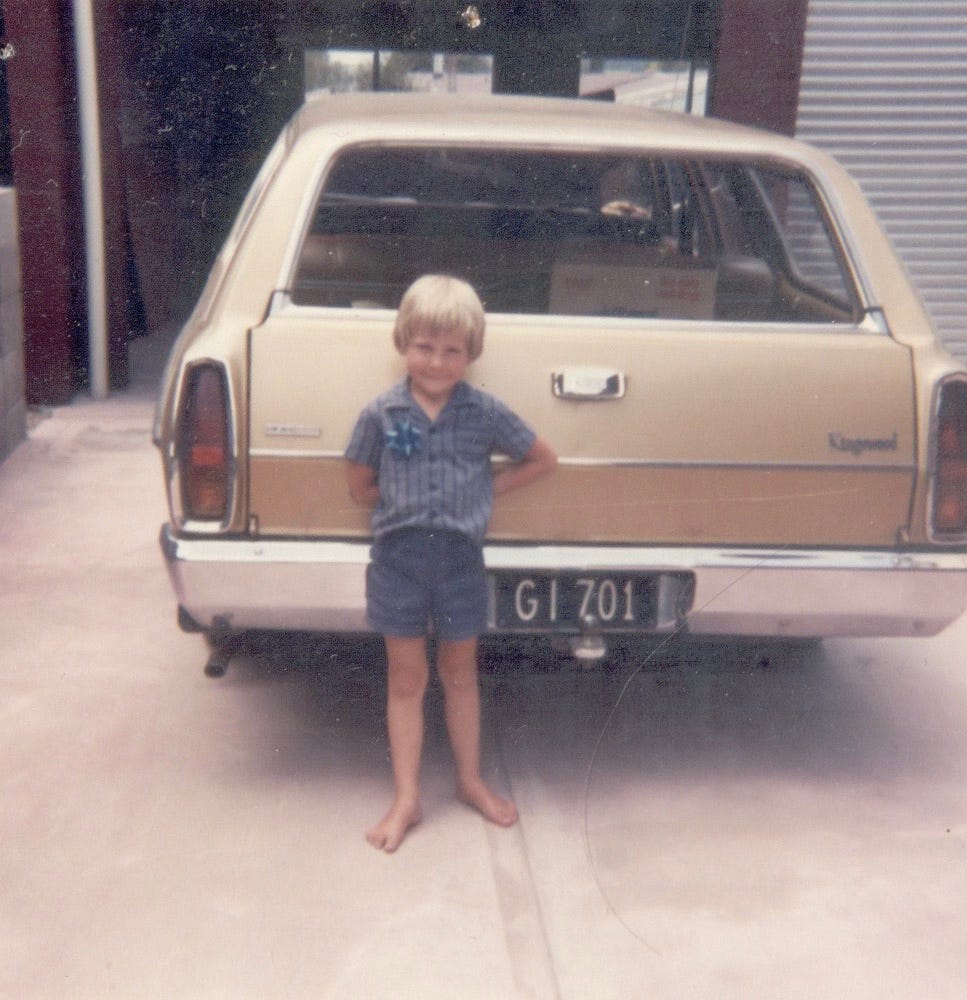
The harsh realities of life then start to crash in. What was perhaps tolerated when you were a small kid – the childlike exuberance that allows you to just express whatever comes out, whether laughter or tears or fright or the sheer delight at just swinging in the swing again and again and again – now seems to be not quite as child-like and innocent anymore. Those crazy crayon drawings that bore no real likeness to the person you were drawing, but still made it onto the fridge, now turn into expectations of how well you do at reading or maths or writing. Or sports. Our intuitive little brains perceive – maybe wrongly, or perhaps quite insightfully – what will help us fit in and succeed in this big, unpredictable, and sometimes brutal world. Free-form childlike expression turns into adaptations and safety measures. You don’t want to stick out in this world. Especially not in small-town New Zealand.
Thresholds
Fast-forward to present-day me. I find myself now standing on some kind of threshold, in a number of ways: some of my choosing, some really not.
In many ways, life has been pretty kind to me. My childhood was safe and secure, with loving parents and two good big brothers. I had no major childhood traumas, and I’ve never really been without. Now, I have two amazing daughters, and a loving and supportive wife of 22 years. I’ve succeeded in a number of things that I’ve turned my hand to. I’ve been able to fit in to this place okay. That’s a privilege, and I know it.
Here’s the thing though, and this is true for all of us I think: fitting in doesn’t necessarily equal belonging. Fitting in is playing the game, keeping your head down, adapting to the world and culture around you and not rocking the boat. That is important in society… to a point. Belonging is truly feeling at home in your own skin, with all our particular quirks and diverse wirings and the stories our varied experiences tell. Belonging means that all of it matters. That all of us matters. And realising this can wake us up from a mid-life slumber, of just getting by, of making ends meet, or playing the game expected of us. And certainly of hiding any quirks or differences that might make us stick out. Of not meeting cultural norms. As Brené Brown put it, “fitting in is the greatest barrier to belonging.”
Fitting in, I’ve discovered during the past decade of research, is assessing situations and groups of people, then twisting yourself into a human pretzel in order to get them to let you hang out with them. Belonging is something else entirely—it’s showing up and letting yourself be seen and known as you really are—love of gourd painting, intense fear of public speaking and all.
“Many of us suffer from this split between who we are and who we present to the world in order to be accepted. (Take it from me: I’m an expert fitter-inner!) But we’re not letting ourselves be known, and this kind of incongruent living is soul-sucking.” (Brené Brown)
Looking back, retracing the steps of my life so to speak, I can see where those subtle shifts in my and my natural expression took place. It was never conscious, but I perceived that this innate expression of me wouldn’t be fully seen or appreciated in semi-rural, 1980s New Zealand. The stereotypical Kiwi bloke was a gruff, stoic, silent type that didn’t ponder or fuss, but just got stuff done. No flourish or emotional expression.
There’s some deep-level, non-conscious survival instinct wired into us that, at a certain point in our life journey, we suddenly feel naked, exposed. The uninhibited, child-like version of us suddenly feels vulnerable – not safe, not seen and not in control. We instinctively crave security, validation and a sense of mastery or competence, but at some point we begin to intuitively fear that our childlike expression of ourselves makes us more vulnerable to rejection. So we adapt. We put on masks. The Latin word for ‘mask’ is ‘persona’. We wear these masks as a different presentation of ourselves so we can stay safe, be accepted, and be masters of our own environment and destiny. And these masks largely work. For a time at least.
One of the OG’s of modern psychology, Carl Jung, put it like this:
“Thoroughly unprepared, we take the step into the afternoon of life. Worse still, we take this step with the false presupposition that our truths and our ideals will serve us as hitherto. But we cannot live the afternoon of life according to the program of life’s morning, for what was great in the morning will be little at evening and what in the morning was true, at evening will have become a lie.” (Carl Gustav Jung)
I’m not exactly sure how to quantify morning, afternoon, and evening of life. I think that probably varies from person to person, and these realisations come at different times for different people, brought on by different life events. There’s no exact dates. But these shifts happen. Sometimes we know clearly at the time, sometimes we only realise in hindsight. You could describe these shifts as liminal moments. ‘Limen’ is Latin for threshold. Like the threshold of a doorway; neither inside nor outside. In-between spaces. Transitions. These moments might be brought on by events or simple realisations. They might be grounded in physical necessity, or a kind of spiritual epiphany. It varies. But we all have them.
American Franciscan priest and writer Richard Rohr put it into even simpler categories: the first half of life and the second half of life.
“There is much evidence on several levels that there are at least two major tasks to human life. The first task is to build a strong “container” or identity; the second is to find the contents that the container was meant to hold. The first task we take for granted as the very purpose of life, which does not mean we do it well. The second task, I am told, is more encountered than sought; few arrive at it with much preplanning, purpose, or passion…
“… it takes us much longer to discover “the task within the task,” as I like to call it: what we are really doing when we are doing what we are doing.” (Richard Rohr)
The Second Act…
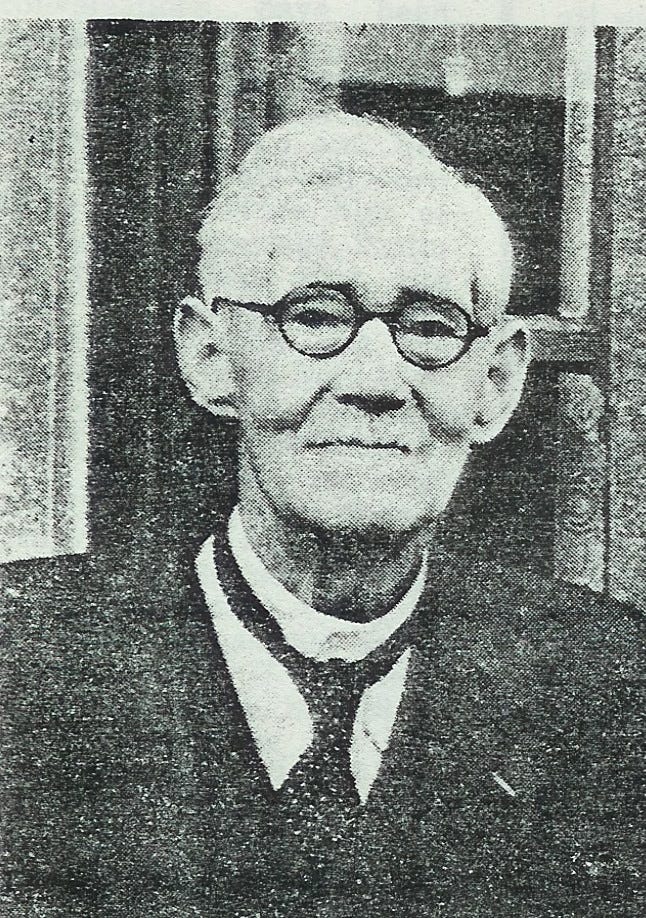
I’m currently 48 years young. My great-grandfather (my mother’s father’s father), a subsistence farmer near Ballymena, Northern Ireland, lived to 96. So I’m claiming my halfway point based on him. Humour me here.
My grandmother (my mother’s mother), in her latter years, suffered osteoporosis and joint-issues stemming from poor early nutrition in industrial England. I remember her as soft, caring, doting and empathetic. She was also made of English steel, tempered by the two World Wars she lived through, including the frightening blitzkrieg on her hometown Portsmouth. All of this while Grandad was away in the British Navy, never knowing if he would return. After the war, they emigrated to the other side of the planet, to this strange, far-flung, mystical place called New Zealand. Grandma and Grandad and their two daughters, born either side of the war, left in 1952 knowing they’d probably never see parents and siblings ever again. Isolation from supports. Traumas behind, and fear of unknowns ahead. It worked out, but she stoically carried all that through to 94 years of age. I also carry that in my bones. Literally. I’ll talk about epigenetics and genealogies and the carrying of our ancestor’s stories one day. It’s a thing though.
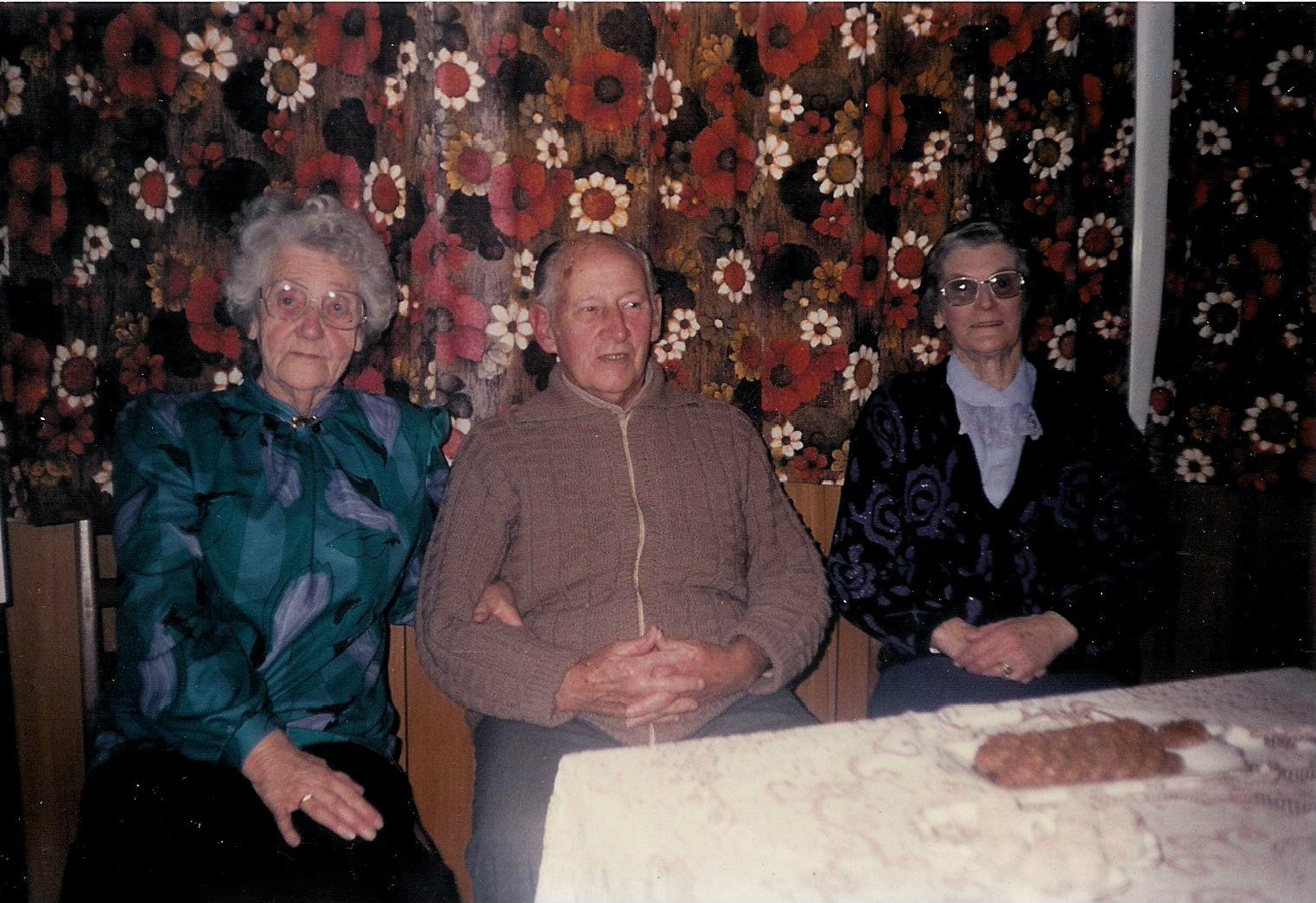
My Nana (my father’s mother) seemed to me as a child a slightly more distant soul. I loved her, for sure, and she loved me and I knew it. She loved all of her children and grandchildren. Life was hard for her though. She raised 3 children on her own after her husband left her in the very early 1950’s. Before Prime Minister Michael Savage introduced New Zealand’s defining welfare state protections, including the domestic-purposes benefit (or DPB) that provided for solo parents. Life was tough before then, and still tough even with that safety net. She never talked about all that, how it affected her. She was incredible really. Resilient. Despite those traumas, and a fragile body and legal blindness in her latter years, she lived to 89.
Glass and Steel
So I claim longevity genes. And tenacity genes. Though it probably sounds like bragging, it’s not. Really.
Here’s the thing: though there’s steel in my genes, my body’s been like glass these last 20 or so years. I’ve had four major health conditions that have battered me and kept me from work for 18 months or more. I’ll write about these another day, but Chronic Fatigue Syndrome, Type II Bipolar Depression, a ruptured lumbar disc, two surgeries and two years of chronic back pain marked my 2000’s and early 2010’s. I overcame these. Glass and steel. Also with a lot of love and care from those around me. In many ways lucky, despite being bloody unlucky.
I’ve reached another threshold, though. In a weird way I knew a sea change was coming, but not like this. I’d had the chronic health trifecta already, but apparently it doesn’t work like that. I’ve just passed two years unable to work again. A fairly simple soft-tissue injury has turned into a neurological monster known as Complex Regional Pain Syndrome (CRPS). It’s complex. I’m complex.
I’ve run the numbers on the odds of CFS, Type-II Bipolar, lumbar surgeries x 2 followed by non-resolving chronic pain, and then CRPS, all occurring in one lifetime. I’m about 1 in 85 billion special. A unique little snowflake. Part of me likes being a unique little unicorn. Actually, we all are unique, varied, diverse and interesting. Medical history is perhaps the one place where you really don’t want to be interesting or complex.
Intention
Writing. I’ll endeavour to tell these stories over the coming months. That’s my intention for now. To write all of this down.
The idea of writing has been nagging at me since before this injury, but now I have the time. Ironically I can’t hold a pen, or type for long, but dictation is great. And I’ve never been short of words or thoughts or random ponderings. I have a curious mind. I don’t accept things as they appear. There’s always a ‘why’ behind the thing, and I like wrestling with that. Not necessarily finding answers, but asking better questions. Looking at a different angle.
I’ve always had this deeply embedded instinct to take in all the things around me, to introspectively ruminate and ponder on all of them and try to make sense and meaning of them. I’ve always done that; it was there before that ‘morning-of-life pivot’; before I shaped the mask with which I would fit in.
I’ve always looked from a different angle. That annoys some people. That’s okay. I truly believe we’re better off hearing all the different perspectives, the different viewpoints, from all the different experiences and stories. That diversity add breadth and beauty to life.
I know I’m not that diverse. I’m male, white, middle-aged, middle-class, educated, skilled, straight – privileged in so many ways. But my health journey has taught me things. My faith journey and realisations have taught me things. The people I’ve met and stories I’ve heard have taught me things. And I know I’m very different from that old-school kiwi male exemplar. I intuited it wasn’t safe to be a writer or poet when I was a kid back in small town. Maybe it’s safe now. Or maybe, write anyway.
If you wish to follow along…
… let me tell you those stories. Honestly, there’s lots of things in my noisy brain that need an outlet. I’ll try to be regular, but pain and head-space won’t always allow. Aroha mai.
Some weeks I’ll add poetry I’ve written. I might tell a little of the story or situation the poem grew out of.
Some weeks I’ll unpack my reflections on personality, or emotional intelligence, or the fascinating way we’re wired as humans. For better or worse.
Some weeks I’ll share my thoughts on faith, or life, or purpose. The ‘why's that have informed and altered and confronted me along the way.
Some weeks I’ll share my reflections of the ‘Kiwi male exemplar’ as I’ve perceived them to be. I’ve thought about these heroes and anti-heroes and how we can all grow as a culture when we embrace difference and authenticity.
Some weeks I’ll tell a quirky story about me and what shaped me, or someone I’ve met along the way who made me think twice about something, and left a mark of sorts.
This is my intention, and it’s as much to bring voice to that small child hiding within me. He’s been hiding away, not really sure if it was safe to write like he did before the mask came on. I think it’s safe now. I hope so. Hope is everything.
And, leave a comment. Tell what made you ponder, what resonated, what didn’t, what you’d like to hear me write more about as we go. I’d love to hear from you too!
Looking forward to more from your gift of writing, Mark. Good to know you and good to be part of your Substack community.
E hoa, you did it! Proud of you for this journey you have begun, looking forward to meandering along the pathways you unfold for us. Aroha nui