
Fast Cars and Straight Talkers
A case study of cultural identity and the world of Formula One

My last article was a deeper dive into the layers of human awareness and emotional intelligence, and how our instincts inform how we turn up in the world individually and collectively. How we fit in, and why we try. This article is a case study of historical values and exemplars, with a live example of a new star being measured by our perceptions, and what that says about us collectively.
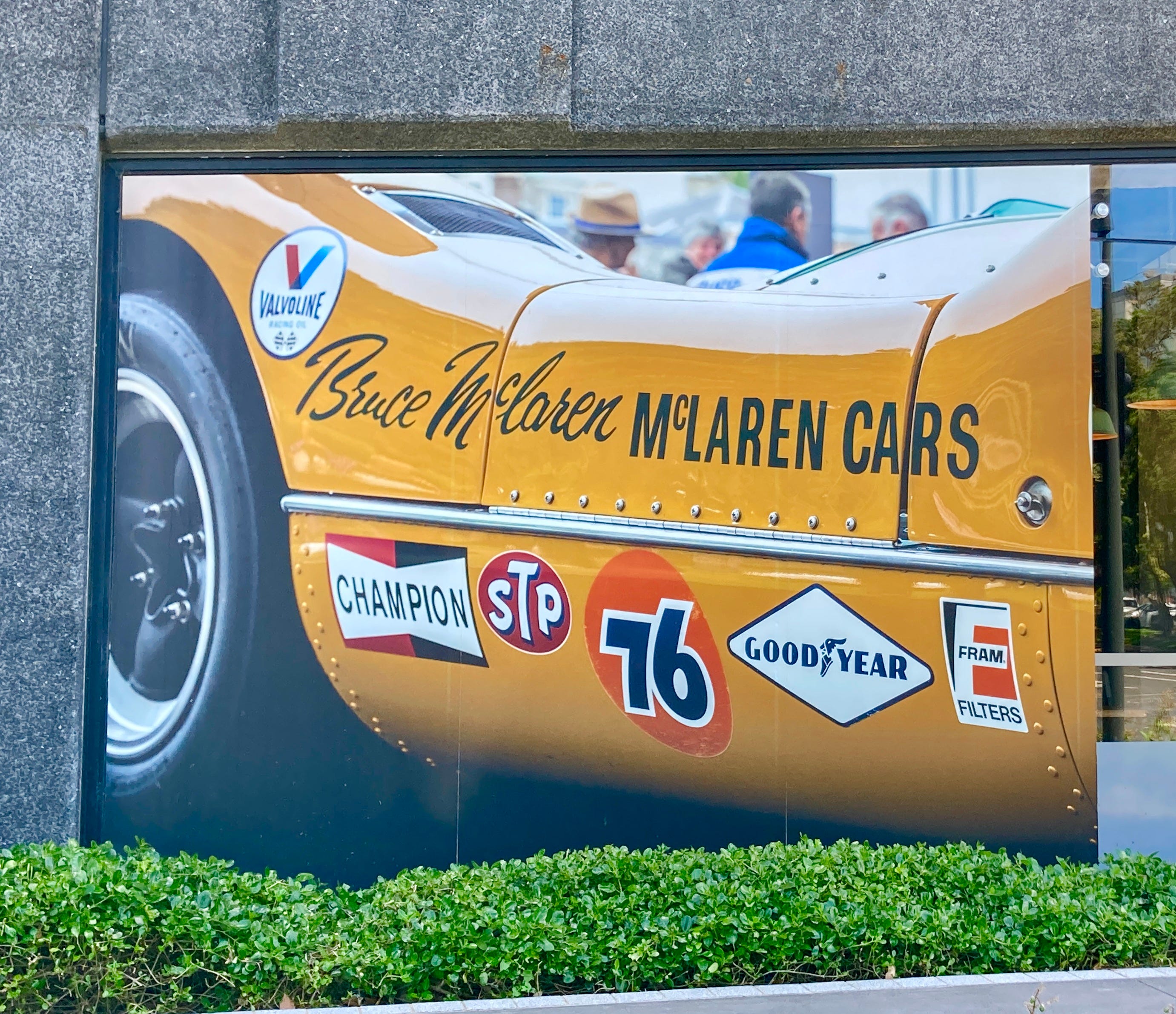
This week marks the end of another Kiwi summer, down here in our upside-down little corner of the world, as new seasons begin in the dominant Northern Hemisphere. And one of the largest, richest and most-watched sports is poised for a new season: Formula One. New Zealand has a proud and storied legacy in F1, especially the 60s and early 70s golden era with three Kiwi heroes who etched their names into motorsport’s halls of fame. Now a new Kiwi name is fighting to make his mark on the biggest motorsport stage: Liam Lawson.
Lawson’s name is popping up in our headlines again ahead of next weekend’s Melbourne Grand Prix, after his trial by fire in 2025. F1 isn’t just motor racing; it’s a multi-billion-dollar media ecosystem, turbo-charged by Netflix’s Drive to Survive with its hero/villain storylines and sensational headlines; motor-racing meets soap opera.
A Golden Age
Kiwi pride rests on our golden age exemplars: Denny Hulme, 8-time GP winner and 1967 World Champion; a big, rugged man with a quiet but gruff persona; known as ‘The Bear’ he was widely respected. Chris Amon was “charming and modest”, smooth on and off the track with a second-to-none ability to discern and tune a car, according to none other than Enzo Ferrari.
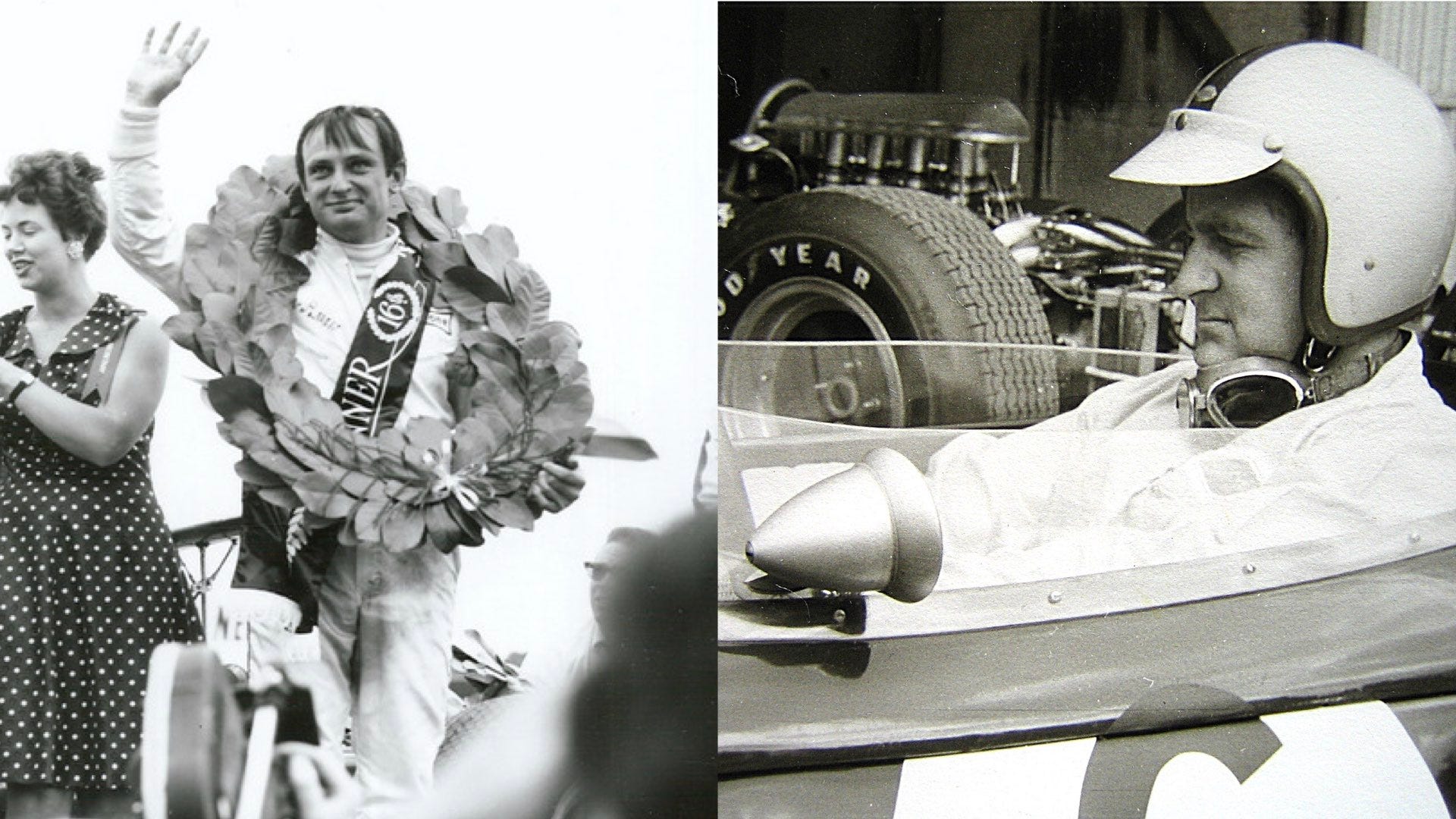

One Kiwi name stands tallest as synonymous with excellence: McLaren. The 2025 champion team is named after Bruce McLaren; our first F1 winner founding the team in the 60s, attracting the top designers and engineers with his charismatic, sunny personality and fierce determination to succeed.
The strong-silent type, and the affable, understated geniuses; three iconic Kiwi exemplars.
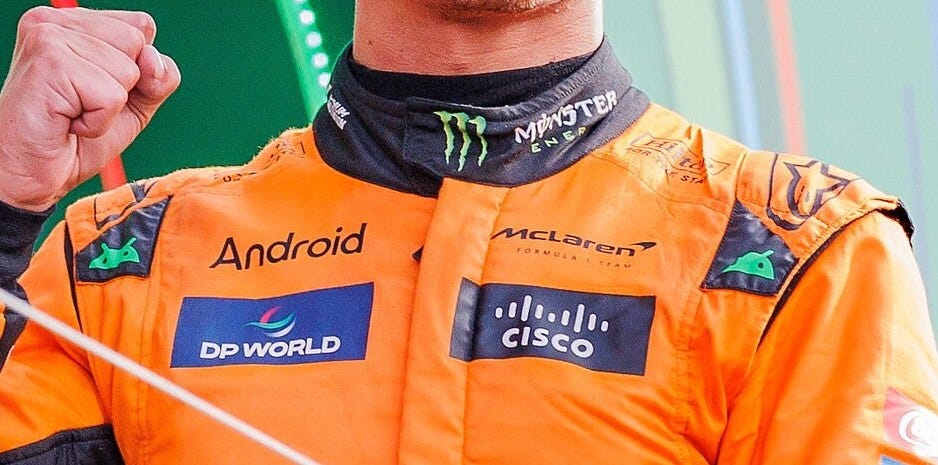
Kiwis are still on the podium. Look very closely at 2025 champion Lando Norris’ racesuit. Just beside that hallowed name McLaren. Right by the ‘N’, see it? Yep, a kiwi. The flightless bird, that is.
.jpg)
I know that sounds like grasping at straws, but we’re a bit salty McLaren are world champs and New Zealand doesn’t get credit. Both the winning drivers and teams get their national anthem played at the end of each race; Lando’s a Brit and gets God Save The King, but so does Team McLaren, somehow claimed by Mother England. Even worse, when Lando’s Aussie team-mate Oscar Piastri wins, we hear God Save The King and Advance Australia Fair. Now that just hurts our souls.
Liam Lawson’s our big hope to change all that. When asked by a journalist about McLaren’s anthem, he called it straight: “It’s completely bulls***... It’s a New Zealand team... Bruce McLaren is an absolute legend.”1 Dead right, Liam, but be careful how you say it; Kiwis are friendly and affable, and not brash or abrasive, remember? Definitely not big-heads. Likeable.
Except Liam did come off brash. And abrasive. And worst of all, not liked. On or off track.
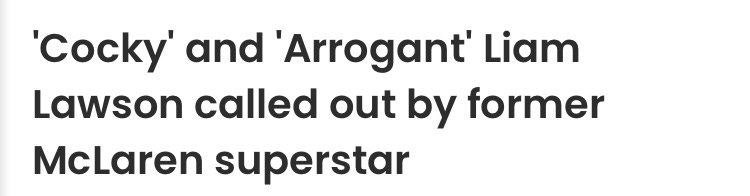
Headlines and social media labelled Lawson as brash and arrogant. Other drivers called him aggressive and dangerous; he was filmed giving another driver the finger while passing him.2 When asked about his brash style Lawson replied, “I’m not here to make friends.”3 Oh dear Liam.
Comments and headlines build a preconception in our subconscious, and Netflix grips its viewers with reductive hero/villain binary narratives. Our non-conscious brain soaks this data in and builds a picture about who fits in and who might be rejected based on persona. This is true on an individual level, but also for a small country once lauded for punching above its weight, but now on the margins of the global stage, hoping our guy might make us famous again; not just for succeeding, but for embodying the ‘Kiwi way’. But is this fair on a 24-year-old trying to come to grips with the glare of the global spotlight, and a car that corners at over 300 km/h with 6 g’s of force on his adrenaline-fuelled senses? Do we have any idea what that’s like?
2025
Lawson was promoted to the top Red Bull ahead of the 2025 season, to partner legendary 4-time world champ Max Verstappen. Red Bull is a proper title-winning team, ruthless and determined. Our NZ betting agency was offering $20 odds for a Lawson race win; hopes were high but the wheels came off faster than anyone dreamed. After just two weekends – where he crashed in Melbourne and qualified last in China – Lawson was sensationally axed, replaced by former friend-turned-villain Yuki Tsunoda.4 Kiwi talkback and social media lit up with tall-poppy cutting barbs; he had it coming, was never that good, deserved it for his attitude.
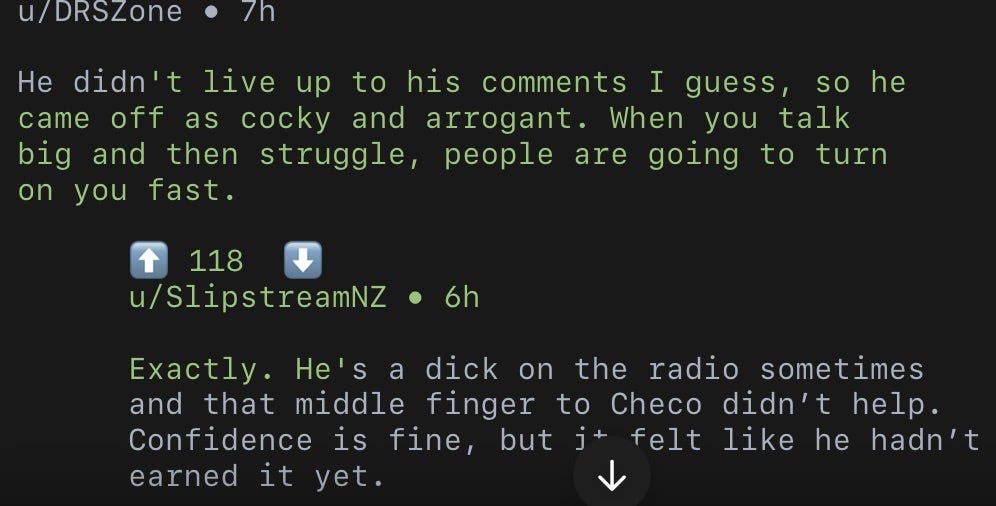
To be fair, this wasn’t a universal sentiment; Lawson received a huge amount of sympathy for an unfairly short opportunity to adapt, from fans, experts, and fellow drivers. A scapegoat narrative formed, with Liam as victim and his Red Bull boss the pantomime villain.5 But this is still narrow binary thinking, ‘either/or’ categories that miss the nuance that allows space for more thoughtful, considered ‘both/and’ critical thinking. To get to this space requires pausing and questioning, considering what might lie behind the headlines, outward personas and our own preconceptions. Emotional intelligence.
Lawson survived a brutal 2025. Though he was cut from Red Bull, he still had a seat with their junior Racing Bulls team. He still got to race in F1. He deleted his social media accounts, kept his head down and worked hard. He showed poise, determination and self-awareness, earning his seat for another season and learning harsh lessons that place him in good stead. He has a future, he’s still fast, still has that self-belief that won’t back down to anyone. What may have been spun as arrogance was simply belief and drive. Don’t believe all the headlines.
Exemplar Comparisons
Comparing Lawson to our iconic exemplars of yesteryear is unfair. That was a completely different era with different expectations and without our modern clickbait headline newsfeeds. We don’t know the real Liam Lawson, but digging deeper we discover the rose-tinted memory of our exemplars wasn’t the whole of them either.
Hulme would surely have despised being filmed by Netflix, having a reputation for clashing with prying journalists trying to spin a story; they dubbed him The Bear, and not for his physique. But behind his gruff persona he was a sensitive man. He saw too many fellow drivers killed, none affecting him more than his friend and team-mate McLaren, killed while testing Hulme’s car in 1970.6 Denny was inconsolable, but that anguish drove him to push for safety changes, knowing the younger drivers couldn’t rock the boat. A values-driven truth-teller, he quit in protest after the 1975 season.
McLaren was likeable and charismatic, but fiercely driven and determined; those who didn’t match his tenacity didn’t last at McLaren.7 He was a visionary who died before his time, just 32. This also impacted Amon, who, like Hulme, quit after witnessing too many deaths and not enough safety changes. He too had a truth-telling streak.
Returning to NZ, Amon became a TV expert on an early 80s motoring show. After testing the latest Toyotas at his beloved Manfeild track, he shockingly roasted Toyota; their cars were unsafe and handled like dogs. Toyota executives were shocked by his on-air outburst. Had Amon paused to consider the potential consequences of offending a global manufacturing giant?
Toyota, rather than react angrily, responded by reaching out to Amon to chat. They didn’t expect it to go well, but were pleasantly surprised by Amon’s disarming humility and pragmatic solutions. By looking past headlines, an enduring relationship was born that changed the ways cars were made around the world.8
“Almost single-handedly [Amon] raised the safety and quality of Toyota suspensions – first here and then globally. And this in turn forced other car makers to raise the ride and handling safety of their own cars. One can only imagine the number of lives that have been saved by his work – it is probably in the thousands and, for me, that will be his enduring legacy.” (Toyota New Zealand CEO, Bob Field)
Amon dared to tell the truth: not impulsively or brashly, but from a place of honesty and values. He knew himself and the gift he brought to the world. The famous McLaren changed the way race cars were made, but Amon changed the way your car was made.
Deeper Legacies
Another proud legacy that grew from Amon’s relationship with Toyota was the establishment of the New Zealand Toyota Racing Series, reinvigorating the Kiwi summer racing scene as a high-profile proving ground for young drivers during the Northern Hemisphere winter.9 Amon was the founding patron and ambassador; his name is on the trophy that has been held by 16-year-olds Lando Norris, Lance Stroll, Liam Lawson, and his new 2026 team-mate Arvid Lindblad. Another nod to the legendary straight-talking brilliance of a golden era, exemplars who backed themselves to achieve and excel.
Lawson’s well aware of this legacy, as he’s aware of the tall-poppy undercurrent of negativity that permeates our culture and encourages young Kiwis not to strive or stand out, not to be a ‘try-hard’. Just being on the F1 grid is something few achieve, and he’s hungry for more. A hunger easily spun as cockiness, and an expressiveness interpreted as brashness. Perhaps that comes with the temperament required at that level. What makes us baulk at these qualities in New Zealand, when other F1 drivers are just as direct, driven or expressive and still celebrated by their less guarded cultures?
Perhaps the photo below gives a glimpse of the character behind the persona. In the 2019 NZGP at Manfeild (now named Manfeild Circuit: Chris Amon), Lawson was pipped to the finish by fellow Kiwi Marcus Armstrong, only for Armstrong to receive a five-second penalty for a dangerous pass. Lawson was declared the winner, yet here he’s comforting a distraught Armstrong behind the scenes; leaving the rivalry on the track, showing empathy and camaraderie off it. Race hard and go home, like The Bear would say, and enjoy the friends you make along the way. I reckon McLaren, Hulme and Amon would be proud of that, and would be celebrating Liam Lawson’s achievements. Something New Zealanders should be proud of too.

