
Discovering the Inner Child
Finding forgotten parts of myself amongst old boxes

I was rummaging for an old CD recently, buried in a box under a window seat, when I discovered a trove of old writings. Stories I’d written way back in primary school, a forgotten archive of my childlike creativity. Like a time machine, it transported me back to Standard 2, to a time when I expressed my creativity without a second thought. It was an intriguing reminder of how imaginative and rather zany I was as a kid.
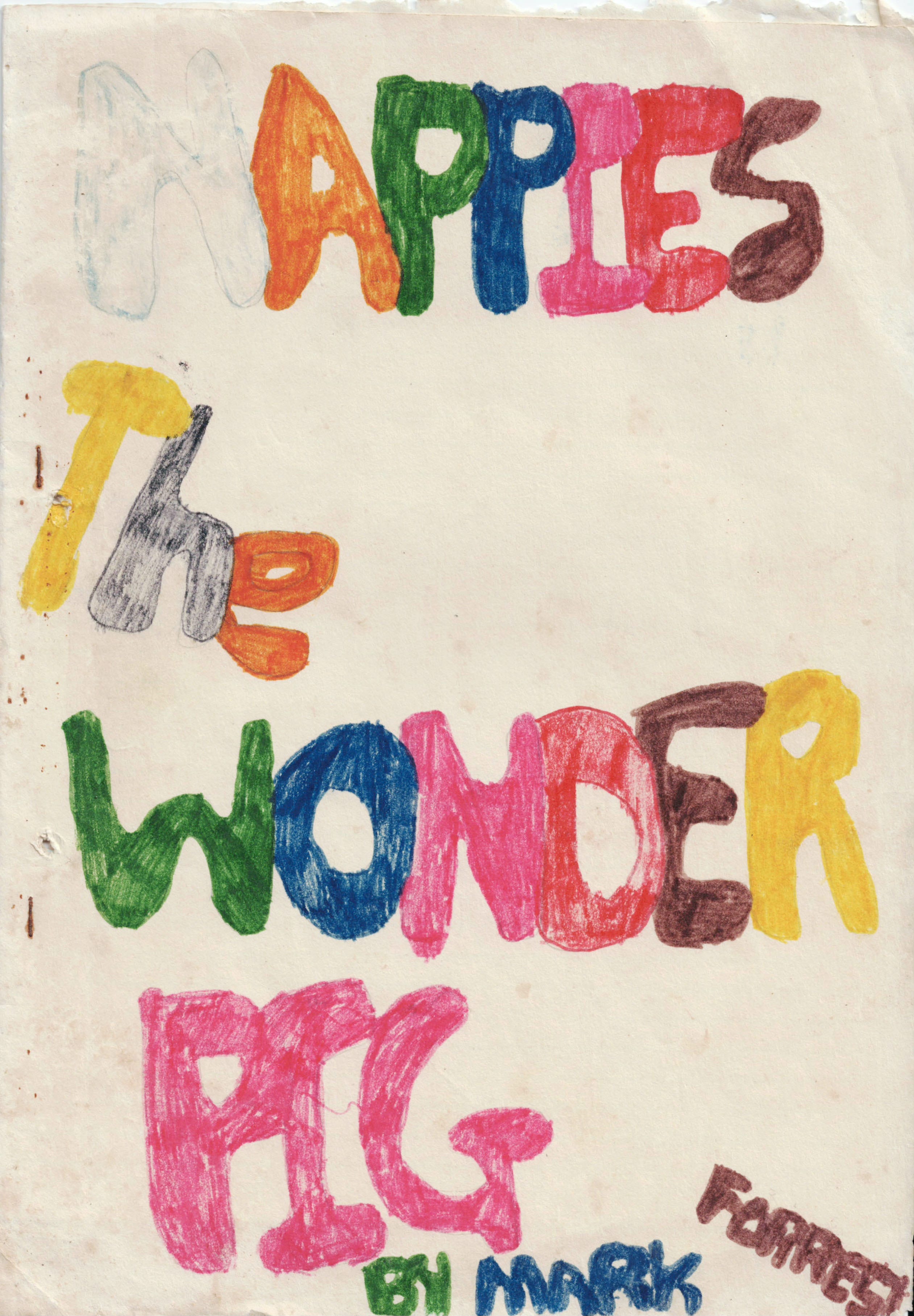
The first story I found was “Nappies the Wonder Pig”, an endearing tale of a little piglet born on an Australian farm, the third of three boys. Their mother died at birth and the farmer abandoned them to a big, wide and scary world. Nappies became separated from his siblings, alone and forced to find his own way. He carjacks and crashes a car, flees the scene, scrambles through a town, and stows away on a plane to Christchurch. There, he’s unexpectedly reunited with his brothers McFuzz and McGuballface. Together they begin their pilgrimage home, not knowing the way but knowing that together they would be safe, on their journey back to where everything was okay. Until in a dramatic twist near Blenheim, an initially friendly hitchhiker pulls a gun and shoots Nappies in the stomach, and he dies. The end.
This wild and comically tragic story was the freeform expression of the weird and wonderful things spinning around in my eight-year-old head, all the way back at James Cook Primary School in Marton. Finding this story was like finding a long-lost part of myself that had yet to consider that quirky, offbeat writers weren’t really the norm in an 80’s rural New Zealand town; a version of myself I had somehow misplaced along the way.
Rose-tinted Memories
It’s funny the things that stick out in my memory of that time. My Standard 2 teacher, Mr Tate, would sit our class down on the mat – arms folded, knees crossed – and read us stories from Joy Cowley, Witi Ihimaera and Margaret Mahy; iconic Kiwi authors. I also remember him reading my stories to the class. I remember my classmates cracking up with laughter at this zaniness that came from my inner world. Though my stories were weird, my peers enjoyed them. Something from my imagination connected with them and earned me affirmation, without any great effort on my part – these stories just flowed.
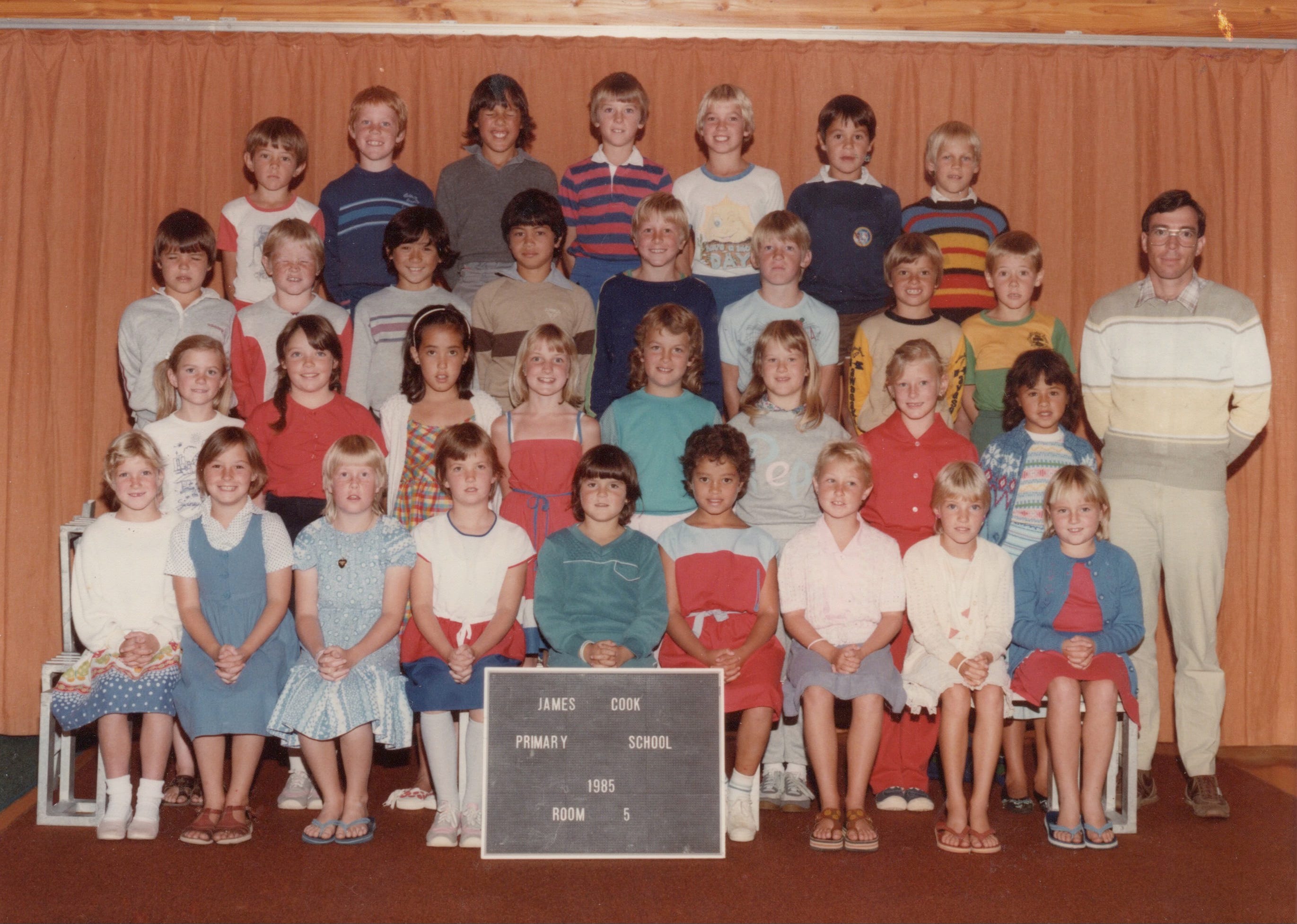
That laughter cut two ways in my memory though. I remember my teachers and peers liking my weird and zany stories, but I didn’t feel like they really liked me. Not naturally sociable, I found friendships difficult, and crowded classrooms over‑stimulating: thirty‑odd kids jammed into a tight room, chaotic noise bouncing off high ceilings and hard walls and lino floors. When my senses overloaded, I was easily provoked by the mean, teasing things that kids just say at primary school: “Mark, plaque, did a fart, on the way to Kōwhai Park” were the taunts that resounded in my head. Mum counselled me to “just let it wash over you”, or “sticks and stones will break your bones but names can never hurt you.” It would have been easier if I could have just shaken it off, but I couldn’t; it hurt. I was sensitive and hyper-aware of what others thought and said about me.
My school reports would read: “Mark’s very good with English and Maths, and excels with his creative writing, but he needs to learn to be more tolerant of others.” I remember reading these reports with Mum and Dad, and while I’m sure they praised my successes, what stuck in my head was the quiet frowns that followed the “needs to be more tolerant of others” bit. I internalised the sense not just that I was doing something wrong, but that there was something wrong with me.
Isn’t it funny how one negative drowns out the many positives in our memory?
Early Environments
Like Nappies, I was the youngest of three boys. I looked up to my older brothers – Craig and Grant, eight and five years older than me – and saw them as confident, competent, and social. They were quite different to each other; Grant was extroverted and outgoing and always had mates around to run around with. Craig was more withdrawing, but still had close friends that he explored and laughed and did stuff with. They seemed to make friends naturally. Socialising never looked hard for them.
I felt safe around my brothers, and safe in the home environment Mum and Dad had built for us. Literally; Dad hand-cleared an overgrown section, once a railway station-master’s yard, and built the house we were raised in before he and Mum were married, 60 years ago. They still live there. It wasn’t just a house; it was a home and family that I felt secure in, a place where I had a space to imagine and dream.
With their hands full mediating my big brothers’ competing personalities, plus the rigours of day-to-day adulting, Mum and Dad were relieved I was largely compliant and could entertain myself. Highly introverted, I treated my bedroom as my own little world where I could be creative and expressive, and unseen as I sang, laughed, and acted out odd story arcs with my soft toys. It was hard to emerge from that secluded space and connect easily with others.
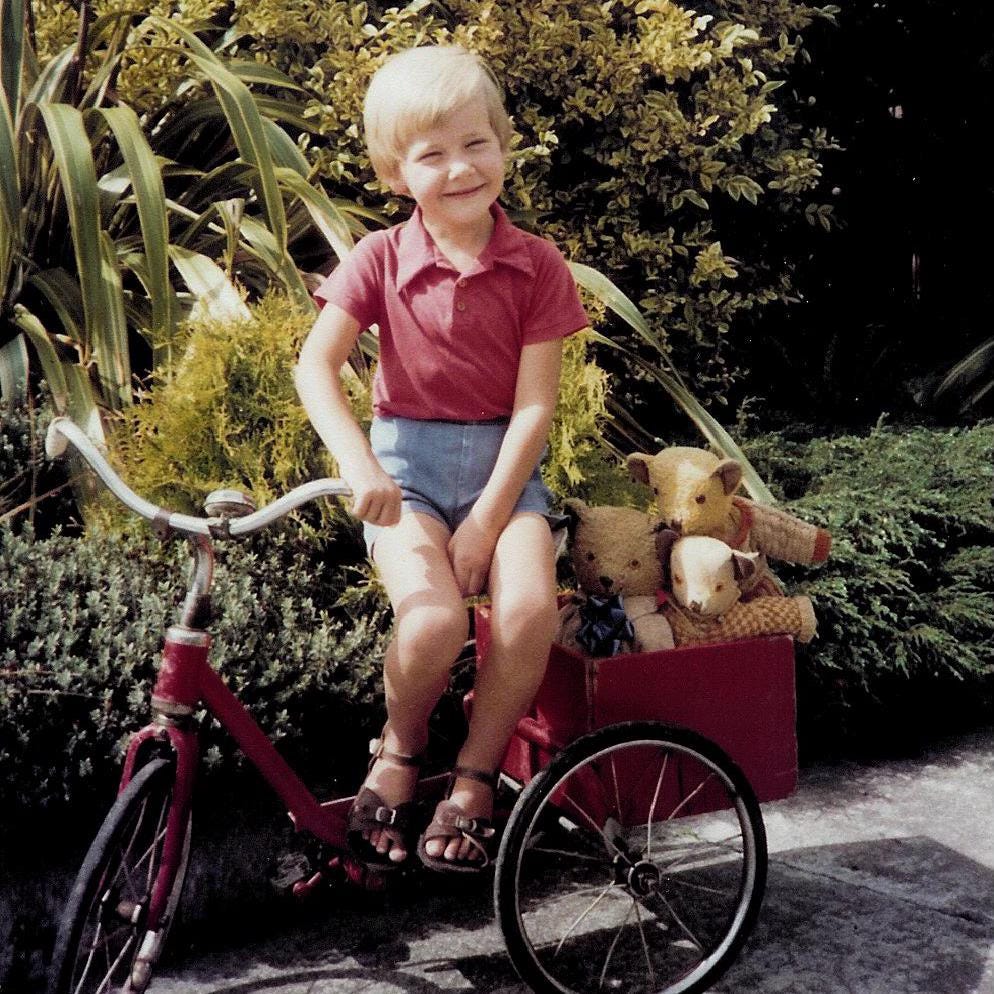
Though I never had words for it then, there was a vulnerable part of myself that I felt I couldn’t express in front of those around me. I could put that quirky creativity into stories that won praise and laughter from teachers and peers, but I didn’t sense they liked the quirky me behind them.
Bittersweet
The word ‘melancholy’ is misunderstood. It sounds like a mopey kind of depression, but it’s far deeper than that. Author Susan Cain coined the term ‘Bittersweet’ in her book “Bittersweet: How Sorrow and Longing Make Us Whole.” It’s not a gloomy sadness, but an innate yearning; a longing for something deeper and more meaningful than the everyday mundane seems to offer. And not just something ‘out there’ but something internal; a nostalgic sense that once upon a time everything was good and ideal, and somehow that’s now fractured or lost and beyond recovery. The bittersweet one is driven by the desire to retrieve this perceived ideal, yearning for that place of belonging and equanimity. And not just a destination, but a journey back to that state of everything being in its right place. Only recently have I realised this bittersweet lens has coloured my world since childhood.
That was Nappies’ adventure, trying to get back to where everything was in its right place; where his family was around him and he felt connected and safe. I have no idea why I made Nappies’ odyssey end so abruptly. Maybe I was inspired by a Shakespearian tragicomedy, maybe the oddball ending of a Muppets skit. Maybe I was taking too long so Mr Tate made me hurry up and finish. I was just eight and it was just a kid’s story. I barely recognise my classroom cursive now, but I vividly remember the class’s laughter and Mr Tate’s praise.
Somewhere along the way, I lost that. There were odd glimpses and outlets for my humour, but largely it’s like I decided that this kind of freeform creativity wouldn’t cut it long-term. I was never consciously aware of this decision; it was a reflexive, non-conscious adaptation to perception. An 8-year-old might get away with zany, random stuff, but some internal instinct told me I needed to grow up and be sensible and useful. And I did find a way to be sensible and useful, to fit in; adapting to what I thought the crowd around me expected. But that melancholic, zany, creative kid has always still been there, somewhere in the shadows, the echo of his voice ringing in my soul somehow.
Shadows and Masks

As I transitioned into adolescence, I began to pack the zanier, wilder, freeform creativity into the recesses of my psyche, just like Nappies and my other stories were buried in a box under the window seat. I began to practise and outwork a more pragmatic and useful version of me. Writing gave way to woodwork, metalwork, physics, and sports; I became a tradie rather than a writer. I learnt to adapt to cultural norms of what I perceived a kiwi male should be like: friendly but tough, hard-working but relaxed, funny but not verbose. Like the cultural exemplars around me: tough rugby players, bushmen and tradesmen; strong-silent blokes that just got stuff done. I learnt to play a part that could keep me under the radar, but while I could project cheerful harmony, or calm, laid-back affability, it only ever worked to a point. Under stress, conflict or the pressures of adolescence, the mask would easily slip and that sensitive, vulnerable and easily overwhelmed kid would still be there, withdrawing in emotional pain or lashing out in explosive reactivity.
I was like a bottle of homemade ginger beer; handled carefully, it’s refreshing, tangy, even sweet, but bumped about and opened in a hurry you’ll likely get a volcanic mess.
I had no tools to understand why I was like this, though. And surely this proved I was still inherently defective, like everyone else had access to some magical social ease that was always beyond reach to me. So I doubled down with the mask of doing, acting, achieving, and hiding emotional expression and creativity.
You see, the best and worst parts of us are so often two misunderstood sides of the same coin. My embarrassing social clumsiness was the flip side of my unique creative gifts. With solitude and space for dreaming, and exploring narratives, storylines and patterns, I could find ways to express my unique and quirky perspectives in a way that brought joy and laughter and even insight to others. My sensitivity and expansive inner world could notice and bring language to things many others missed. But the confines of a classroom of competing pressures, noise, elbows and sensory overwhelm were not my happy place. Acoustic ceilings and walls, calm reading spaces and noise-cancelling headphones didn’t exist in Marton in 1985.
The Journey
And yet here I am, writing again about Nappies, and rediscovering that inner child who has always been there, still very much a part of me, and with life circumstances a full-circle opportunity and space to dream and write again; to tell my tales and try to give language to loss, longing, hope and integration; that all the parts of us belong, and the pilgrimage is worth making.
We all carry that child somewhere within us, and we all, for large portions of our lives, keep that child in the shadows, an instinctive protection of the more vulnerable parts of ourselves. How that catches up with us varies: perhaps it’s a slow, gnawing sense of emptiness or dissatisfaction, perhaps a traumatic life event that forces us to reckon with loss, grief, and the fragility of our lives.
We all face these bittersweet realities, but how we face them matters – whether we make space for, or keep hiding, the unique parts that make you you and me me; whether we keep wandering, isolated and scared, or turn our compass toward home, to that sense of everything in its right place, of truly belonging.